Overview
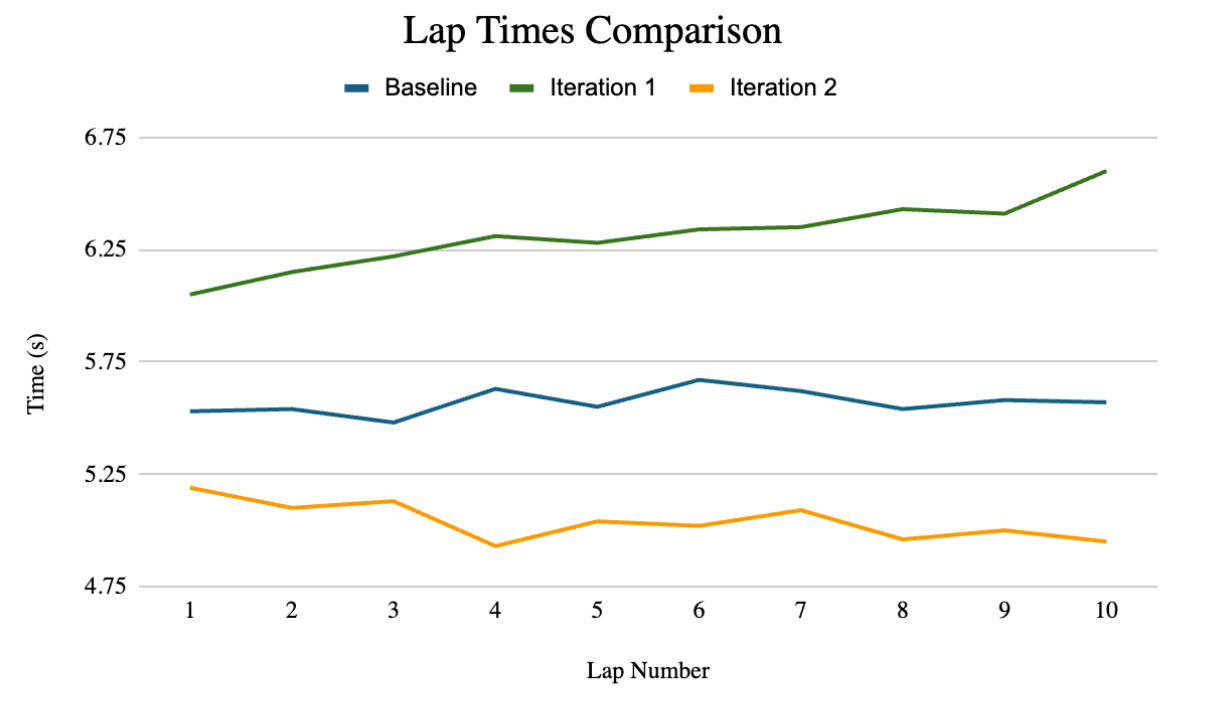
Our ME 340 design methodology class split into teams of 3 to 4 and tasked each with redesigning a Tamiya Mini 4WD car body to run faster around a 3-lap oval track. The baseline body we started from was shaped like a Lexus SUV. Our final design ran 9.8% quicker than the baseline. I was the CFD lead on a 3-person team and ended up doing design work as well.
Baseline & Rules
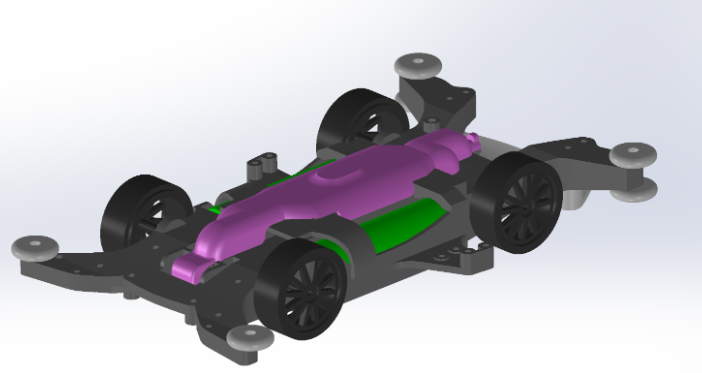
The car was a Tamiya JR Lexus LBX Morizo RR with a 130 brushed dual-shaft motor, a 3.5:1 final drive, and two 1.5 V 1700 mAh Li-ion cells. The rules stated the only thing we could change was the body of the car. The rules also stated that the body had to be a single, integrated, homogeneous structure and that you must have a body. The baseline car ran a 5.603 s average lap over ten laps.
Design
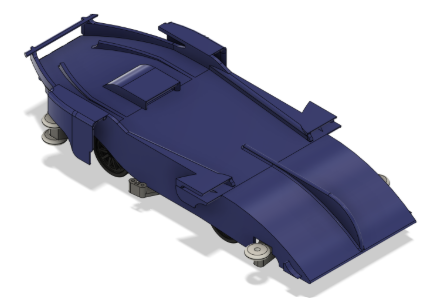
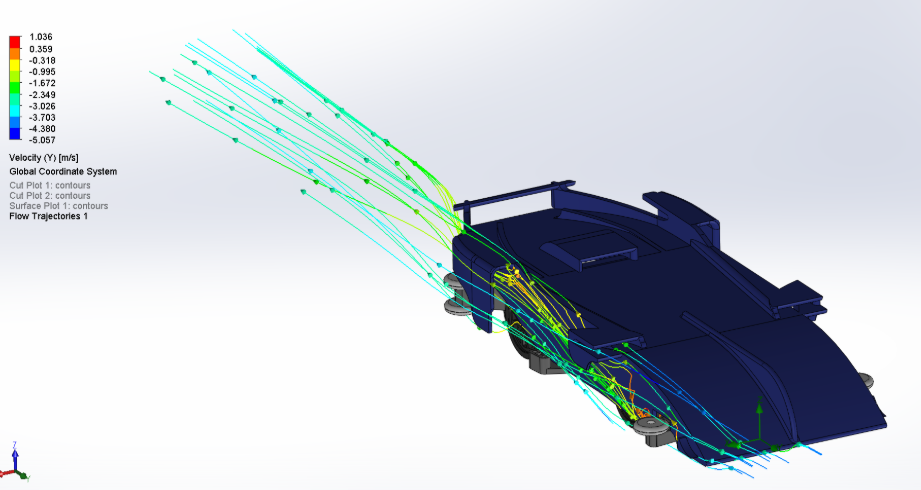
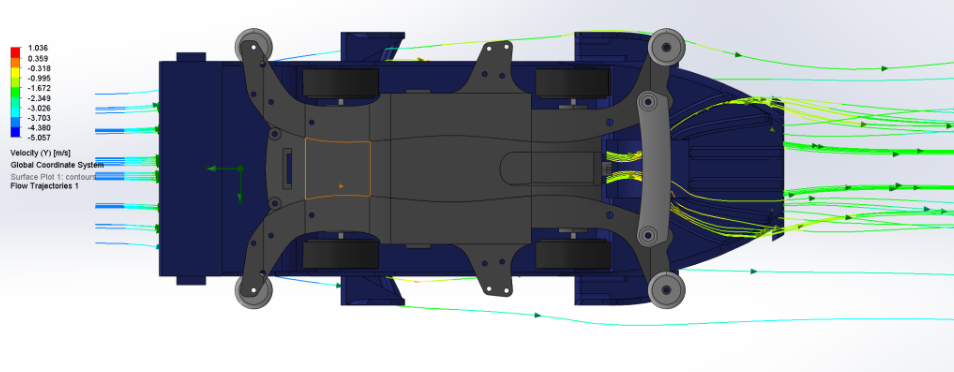
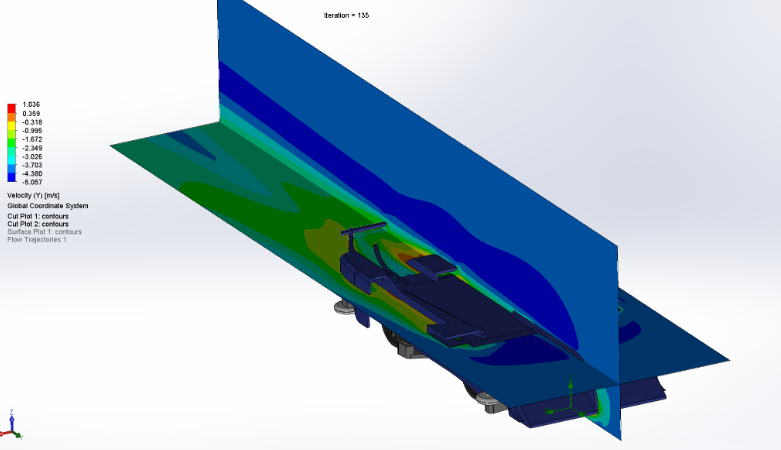
We explored three initial concepts, each with a different design philosophy. Bodies were modeled in Fusion and exported to SolidWorks for CFD. The first was a low-drag shape inspired by the McLaren Speedtail. The second kept that base but added more complex aerodynamics aimed at increasing downforce. The third focused on cutting weight. CFD results matched the wind tunnel data to within 10%, though both sets of numbers were hard to interpret.
- Concept 1, low drag: 0.0141 N drag, 0.0046 N downforce, about 0.39% of the 3.66 N driving force
- Concept 2, aggressive aero: 0.0169 N drag, 0.0063 N downforce, about 0.46%
- Concept 3, minimum weight: 0.0022 N drag, 0.0004 N downforce, about 0.06%
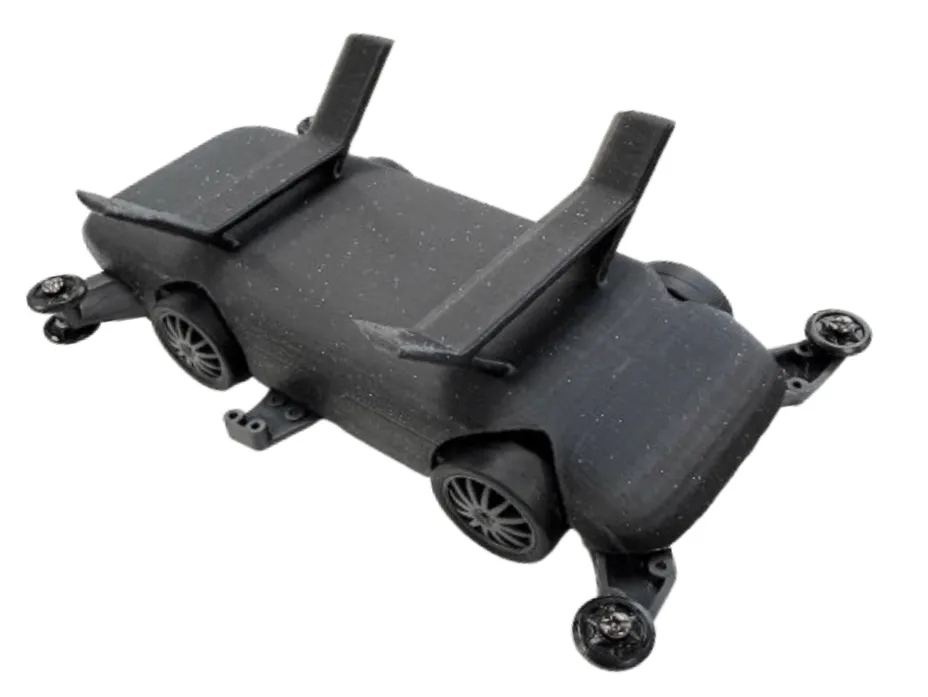
Once the data showed aerodynamics barely affected the car, we shifted focus to reducing weight and increasing stability. The pure minimum-weight concept turned out too unstable and flew off the track. Our final design kept the weight low while maximizing stability, using raised outward-poking wings that generated a little downforce but mainly acted as stabilizer braces to keep the car planted.
Reflection
This project was a lesson in problem solving where the answer that comes to mind first is wrong. Everyone assumed aerodynamics and drag reduction would drive the biggest lap-time gains. The real difference came from improving stability and keeping all four wheels on the ground. The takeaway was to look at every variable specific to your problem instead of defaulting to what everyone else does with similar problems.